The Problem No One Wants to Admit
When we started developing SACIA, our conversational agent system, it wasn't to innovate. It was out of necessity. We had clients writing to us at 11 PM asking about project status or requesting quotes. Our team of 4 couldn't cover that demand without burning someone out.
Most companies face the same dilemma: hire more people (expensive and slow) or ignore customers outside business hours (devastating for conversion). A well-built virtual agent is the third option few explore correctly.
What a Virtual Agent Really Is, and Isn't
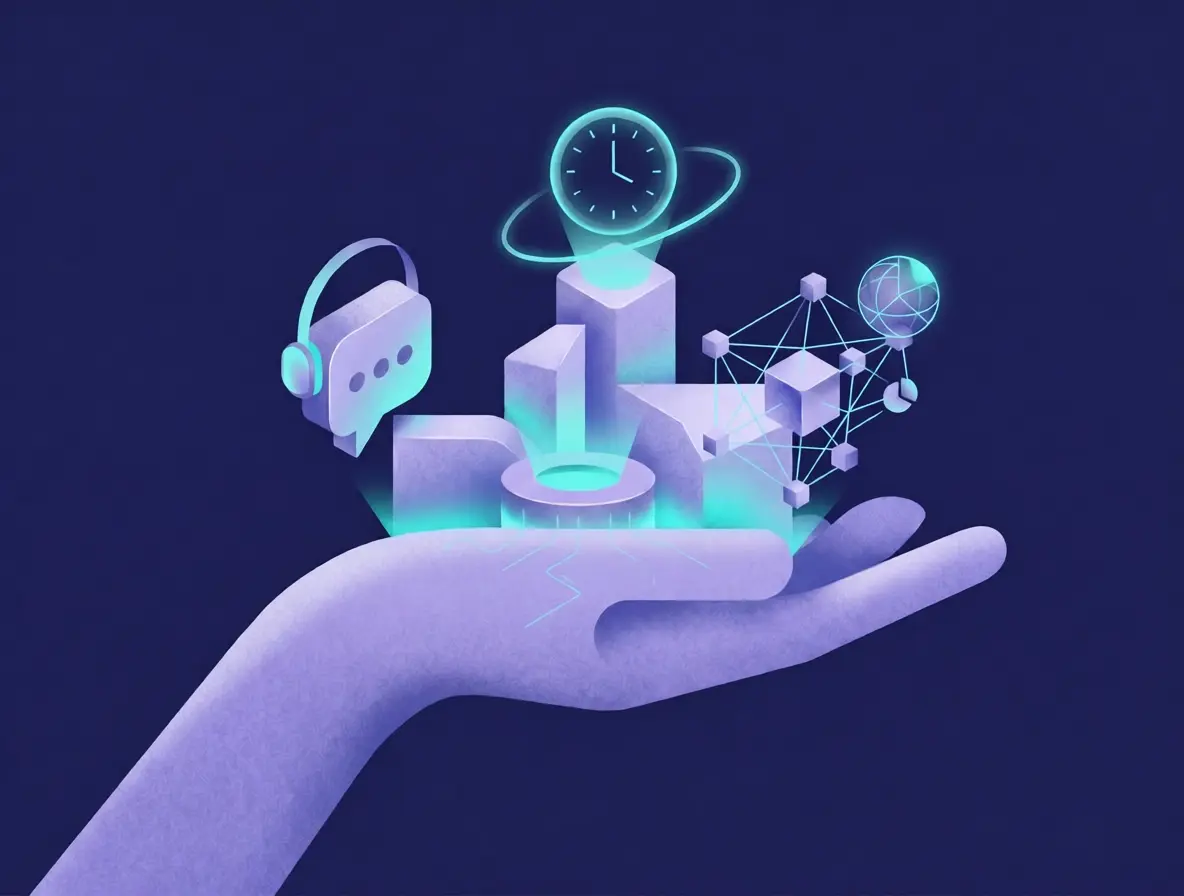
First, what it isn't: a chatbot with predefined responses that frustrates everyone. A virtual agent powered by AI understands context, maintains conversation memory, can access your internal systems for real answers, and escalates to the right human when it detects the situation requires it.
The key difference lies in three capabilities: natural language understanding (it doesn't depend on keywords), integration with your real data (it doesn't make up answers), and intelligent escalation criteria (it knows when to hand off to a person).
What We Learned Building Ours
- 180% of the work isn't technical, it's conversational design. Before writing a line of code, we mapped the 15 most frequent questions from our clients, the friction points, and the moments where a human adds real value. That defined the agent's scope.
- 2The 24-hour WhatsApp Business window is your main constraint. WhatsApp has strict rules: you can only initiate conversations with approved templates, and after 24 hours without a user response, you need a new template. Designing the flow around this restriction is critical.
- 3The metric that matters isn't "messages answered" but "problems solved." We implemented a counting model based on 24-hour conversation windows. It's not about how many messages your bot sent, but how many complete inquiries it resolved without human intervention.
The Framework to Implement Your Own Agent
- 1Step 1: Conversation audit
- 2Step 2: Flow design and escalation criteria
- 3Step 3: Integration with existing systems
- 4Step 4: Training with real data
- 5Step 5: Monitoring and continuous improvement
The most common mistake we see is companies jumping straight to step 3. They buy a tool, plug it into WhatsApp, and expect magic. But without steps 1 and 2, you're automating chaos.
What really separates an agent that works from one that frustrates is the quality of conversational design. What if the user writes something completely off-context? How does it handle ambiguity? When does it ask for confirmation versus act? Those design decisions define the experience.
Results You Can Expect
In our own operation, a well-calibrated agent can resolve between 60% and 70% of inquiries without human intervention. That doesn't mean replacing people; it means freeing the team to focus on interactions that truly require judgment, empathy, and complex decision-making.
The most important return, and the least measured, is the impact on response speed. A lead who receives a useful response in 30 seconds at 10 PM has a significantly higher probability of moving forward than one who waits until 9 AM the next day.
Where to Start
If you're considering a virtual agent, start with the basics: review your last 100 customer conversations. Identify patterns, classify them by type, and mark which ones could have been resolved without a human. That exercise, which takes a couple of hours, will give you clarity on the real automation potential of your operation.